CBM & freight volume calculator
Add up cartons to get cubic metres, air and road chargeable weight and container fill.
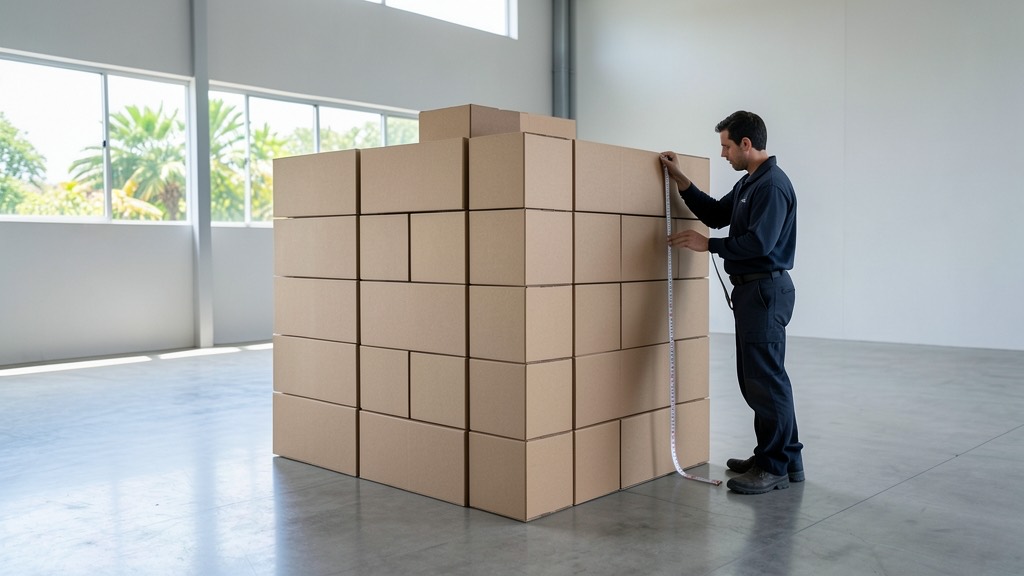
What CBM means
CBM is short for cubic metre, the volume of a box 1 m long, 1 m wide and 1 m high. Freight forwarders price sea and road freight by volume, so a quote usually starts with "how many CBM?". To work it out, multiply length × width × height in metres for one box, then multiply by the number of boxes.
Chargeable weight for each kind of freight
- Air freight uses 1:6000, which makes 1 CBM equal to about 167 kg. You pay for the volume weight or the actual weight, whichever is higher.
- Express couriers such as DHL, FedEx and Aramex usually use 1:5000, or 200 kg per CBM.
- Local road freight in South Africa often uses 1 CBM = 250 kg. Check your carrier's rate card, because some use 200 or 333.
- Sea freight (LCL) charges per revenue tonne: either the CBM or the weight in tonnes, whichever is more.
Container fill uses the inside volume of a standard 20ft (about 33 m³) and 40ft (about 68 m³) container. Loads that aren't a perfect fit usually only use 80–90% of that.
Questions
How do I calculate CBM in centimetres?
Multiply length × width × height in cm and divide by 1,000,000. For example, a 60 × 40 × 40 cm box is 96,000 cm³, or 0.096 CBM.
How many CBM fit in a 20ft container?
A 20ft container holds about 33 CBM inside, but most real loads fit around 26–28 CBM because boxes rarely fill every gap.
What is W/M in sea freight?
Weight or measure. The shipping line charges on whichever is higher, the volume in cubic metres or the weight in metric tonnes.